Rachel’s Journey
Rachel’s Journey
Before I found my craft in weightlifting and performance training, my health journey began the way it does for many people: with the goal of losing weight and changing how I felt in my body.
Around 2010, I became obsessed with researching different ways to achieve my goals. I adopted restrictive eating habits that later developed into binge-purge behaviors, and I began attending local group fitness classes. At the time, I was unknowingly entering the early stages of an eating disorder.
My goals were not built on a stable foundation. The discipline I practiced was fueled by shame and comparison, carefully disguised under the socially acceptable label of “health.”
It opened the door to a deep curiosity about the body, performance, and health. But my understanding of health at the time was narrow, heavily shaped by social expectations and external validation.
My home was rich with culture, tradition, and love. I grew up deeply connected to both my Chinese and Jewish-American roots. Yet outside of my family, I often felt defined more by my differences than by the things I shared with others.
Appearance and mannerisms became the most visible ways to try to fit in. I poured my energy into controlling how I looked, believing that if I could look acceptably thin, I might finally feel accepted, noticed, and valued.
Rewind a little…
My Origin Story:
1995
I was born during a December blizzard in 1995 to my mother and father, along with my two older brothers.
The importance of movement and exercise was deeply ingrained throughout my childhood, largely through my father. As a Kung Fu teacher, he brought me into my first martial arts studio when I was an infant.
My father believed everybody had to move their bodies every day. For 38 years, he owned and operated his own Kung Fu school, where he taught not only self-defense and combat, but also the philosophies of martial arts that extended far beyond fighting itself.
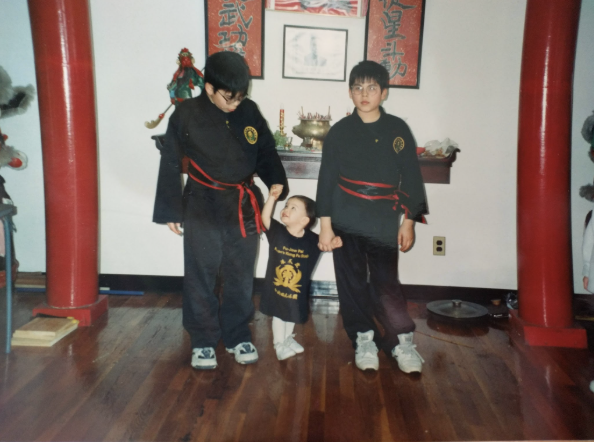
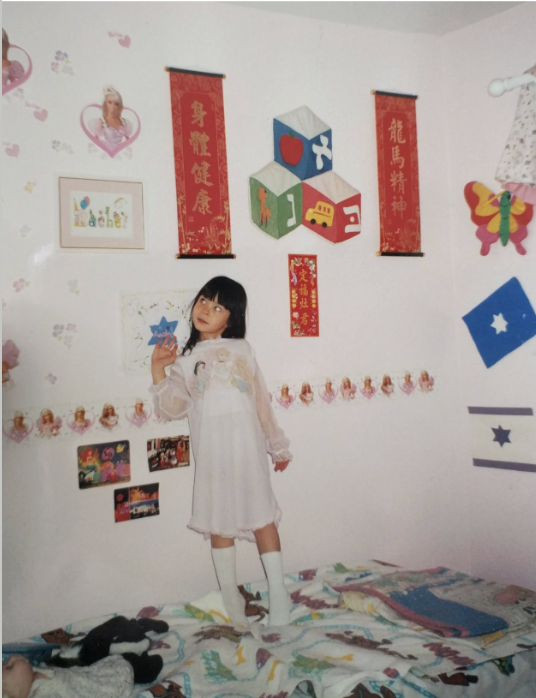
My two older brothers, James (left) and Michael (right), and me (middle) at my father’s second studio in Thornwood, standing in front of the altar.My childhood bedroom showing off my multi-cultural upbringing.Where my father emphasized movement, my mother emphasized education and academics. For most of my childhood, I attended some form of school nearly every day of the week. I was enrolled in Yeshivot through my second year of university, studying both secular and Judaic curriculum while also participating in various extracurricular activities.
As a child, much of this felt overwhelming, along with a strong internal pressure to do everything “the right way.” As an adult, I now recognize how deeply these experiences shaped my understanding of discipline. I now value it as the ability to consistently show up for something meaningful despite temporary discomfort, resistance, or inconvenience.
I spent most evenings after school watching my father teach classes. I also watched my brothers immersed in both Kung Fu and academics through their school years and beyond. Yet despite growing up surrounded by movement, I didn’t feel personally connected to exercise at that point in my life. Honestly… I dreaded it.
I understood that I needed to exercise, so I stayed involved in school sports like basketball, cross-country running, and floor hockey. Still, I participated more out of necessity and a desire to fit in than genuine enjoyment.
FAST FORWARD…
2013
My eating disorder evolved over the years and, honestly, worsened as I entered my first year at Bar-Ilan University in Israel. I had already been in therapy for about a year, but I wasn’t prepared for the level of freedom I had around food.
During this time, my eating disorder shifted from restrictive patterns into binge-purge behaviors. As you can imagine, this deeply impacted my self-esteem, and that year became about much more than academics. It became the beginning of a deeper process of self-discovery. I began to understand who I was outside of what had been expected or laid out for me, and what it meant to live more authentically.
2014
I continued my education at Binghamton University, where I studied Integrative Neuroscience. Around this time, I began exploring what I wanted to be when I graduate.
My father taught me to follow my dreams and work for myself, while my mother emphasized financial security. My brothers helped me specify what kind of lifestyle I wanted by asking me, what I don’t want to do, which in turn helped refine my direction. From that perspective, I knew I didn’t want a job that required sitting all day, which at the time eliminated most traditional career paths.
I enrolled in my first nutrition class, which became a turning point in how I defined “health.” I was introduced to the concept of fueling the body and building trust through self talk, nutrition, and movement. For the first time, I was challenged to question my belief that health was primarily defined by appearance.
Throughout university, I struggled to reconcile what I intellectually understood about health with the patterns my body had already developed. It was my first real exposure to the connection between mind and body. My mind could understand something long before my behaviors were able to fully adapt. This is where the concept of “practice” really struck a chord with me. In order for change to occur, and for mind and body to become aligned, I had to learn to pause before defaulting to my “go to” behaviors and take opportunities to act closer to the way I truly wanted to live. It required repetition, re-patterning, and rewiring my behaviors over time.
Still someone who dreaded exercise but understood its importance, I decided to get certified in group fitness training. Over the next three years, my love for teaching classes like barre, spin, and cardio kickboxing began to grow. I fell in love with the recognition and impact I had on the people who showed up.
That was when I started to wonder if teaching and engaging in movement with people could be my passion. I guess the apple doesn’t fall far from the tree.
I continued teaching group fitness throughout the school year and during summers at my hometown gym.
2017
In the summer, I found out that my father was suffering from stage 4 prostate cancer. At that point, I felt that my education in health came with a responsibility to help educate the people I care about on how to honor their bodies through care for the mind, body, and soul.
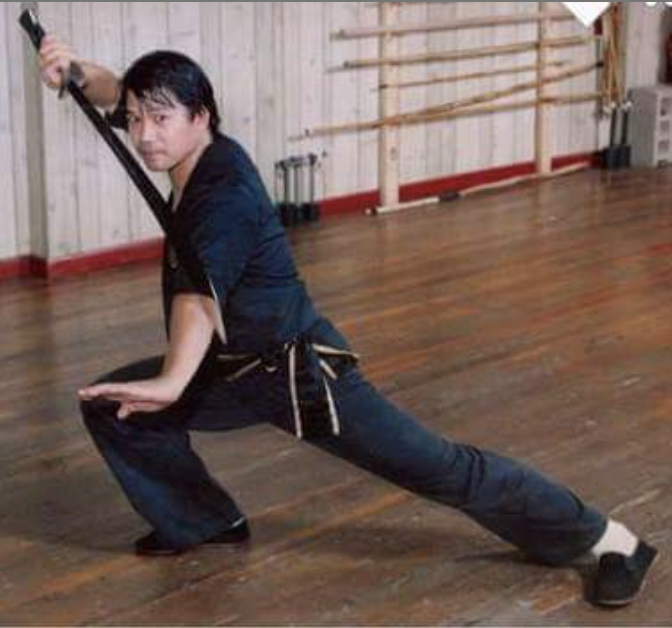
At the end of September, my father passed away from cancer, and I was left reflecting on how his legacy would continue to live through me. With graduation around the corner, I knew I needed to make a decision about my career. By this point, I felt deeply connected to my father through teaching, which led me to pursue my certification in Personal Training through the National Academy of Sports Medicine.
My father, Shue-Yiu Kwan, was a Sifu (teacher) in Kung Fu for close to 40 years. This photo is taken in his first Studio in Valhallah.2018
I graduated with a Bachelor of Science in Integrative Neuroscience and a minor in Health and Wellness. I began my personal training career at a newly opened gym in my hometown. However, because the gym was still in its early stages, I did not feel it was the right environment for me to truly learn and grow.
I decided to move to New York City and work for 24 Hour Fitness in Flatiron. There, I spent more than 40 hours a week working the floor and trying to build my first roster of personal training clients through complimentary 30 minute sessions. At the time, I was probably only training around five clients (one of them being my mom).
The rest of my hours were spent studying philosophies of movement and trying to understand the biomechanics behind human movement patterns. It was there that I met my first true mentor, who helped me build the foundation of my craft. He taught me how to understand movement beyond exercise alone, a foundation I continued refining over the next eight years into the coaching I offer today.
2019
I decided I was looking for more stability and growth within personal training, which led me to begin working at a New York City boutique gym called The LIV Method. This was the environment where I truly feel I did the most “lab work” and built the foundation of my experience in one on one coaching.
I threw myself into my work. I attended countless seminars, continued refining my understanding of movement and coaching, and set a personal goal of making it to the top trainers on the team.
Even when COVID hit, I persevered by shifting my work into virtual coaching. That experience taught me not only how accessible online training could be, but also how effective and meaningful it could become when approached with intention.
By this point, I had experience working with many different populations, and I felt hungry to challenge myself through a higher level of training. That was when I began Olympic weightlifting.
This style of training required me to commit to five days a week of structured programming. I hired my own coach and met with him weekly at SoHo Strength Lab. Around the same time, I also began training at Solace New York.
In these environments, I was exposed to elite level athletes and immersed myself in a completely different standard of training, discipline, and performance. This was also the year I began coaching my first client specifically for Olympic weightlifting.
2022
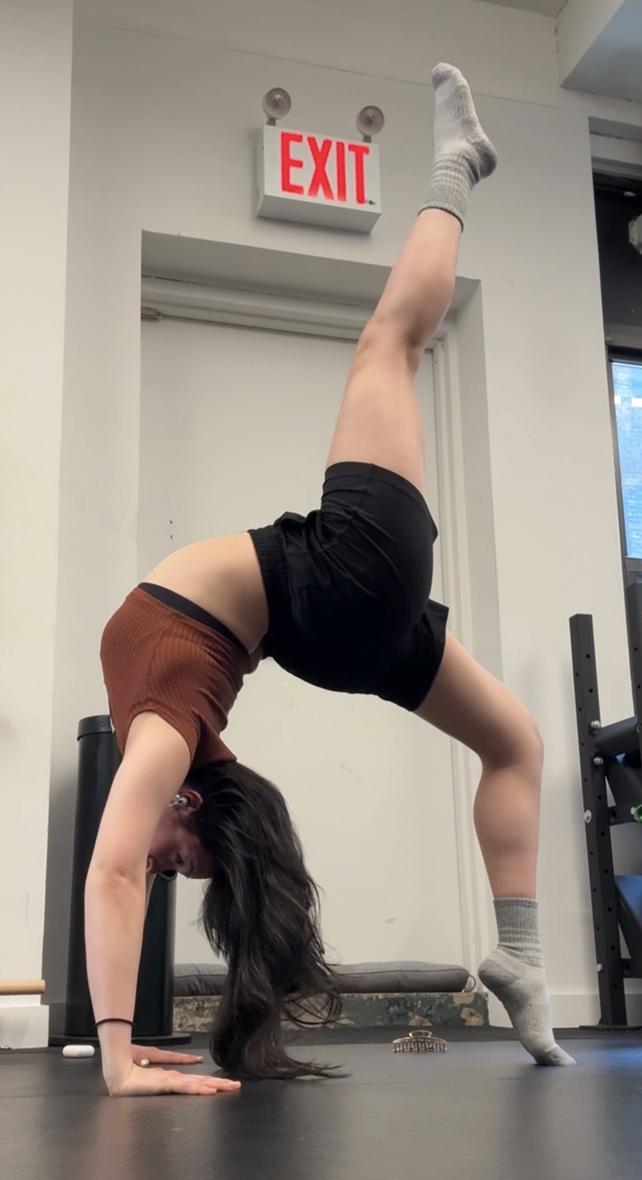
I began really exploring my body's capabilities in many facets of movement.2023
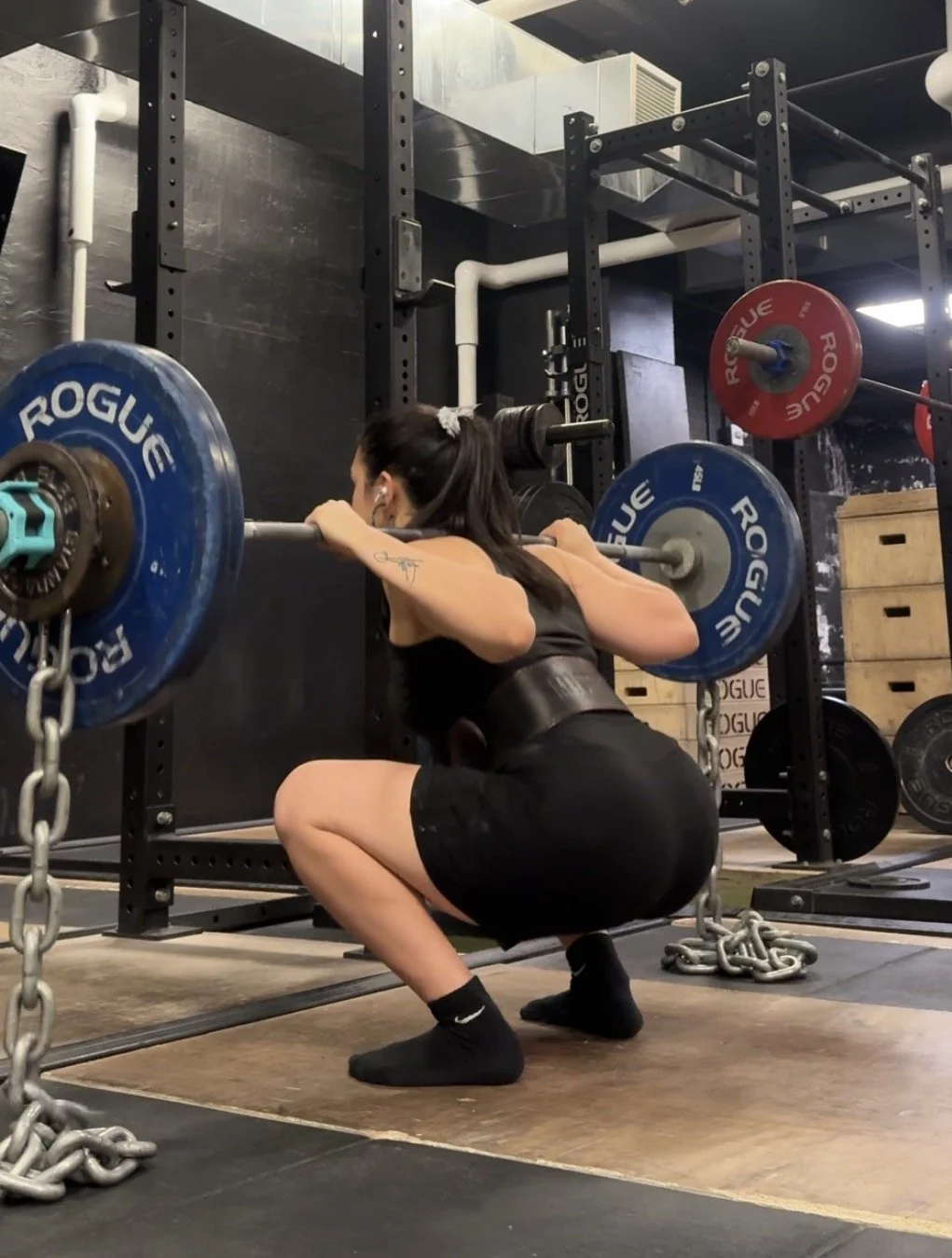
My own training became a balance of Olympic weightlifting, strength training, calisthenics, and sports performance. This was the first time my goals shifted more toward performance than appearance, and my body began to reflect that change.
During this time, one of my clients decided to enter his first Olympic weightlifting competition. I had never been to an event like this before, let alone coached someone through one. I decided to fully step into the experience and, on the same day, compete in my own first Olympic weightlifting meet while also coaching him through his. It was the first time I had ever felt so intensely dialed into both roles at once. I am deeply grateful for my mentor, who supported me through the process, and for my client, who trusted me in such a vulnerable and unfamiliar experience. That day became a turning point in my coaching. From that moment forward, my craft elevated to another level.
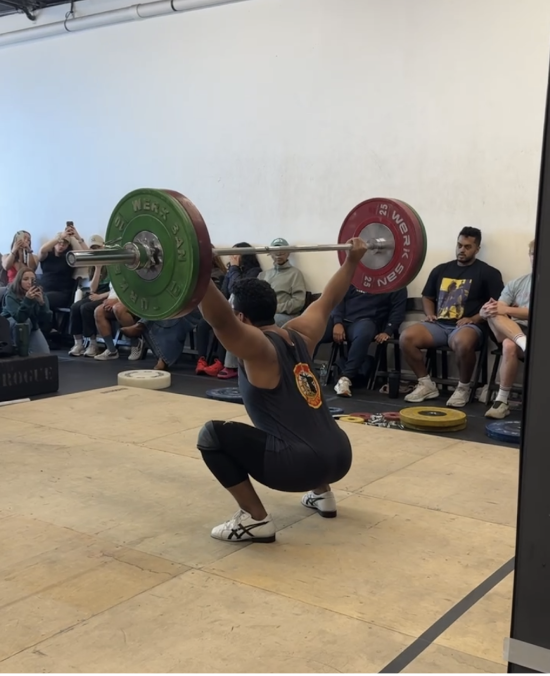
My client, Jose Garcia, completing a snatch at his second Olympic Weightlifting Competition at Brooklyn Training Hall, 2023.It is important for me to acknowledge that, at the time, my training was still able to be influenced by comparison and external benchmarks. That layer of motivation was very present in how I pushed myself.
Two weeks before the competition, I spent 17 hours in the NYU Langone Emergency Room due to severe abdominal pain near my right ovary. The pain had begun a month earlier, but after several unsuccessful doctor visits and no clear answers, I eventually went to the ER. There, I learned I had an abscess on my right ovary approximately 40 times the size of my left ovary.
Despite ongoing pain, I continued training for the competition while taking antibiotics and managing my symptoms as best as I could.
Looking back, this competition is bittersweet. On one hand, I am proud of myself for showing up under extremely difficult circumstances. On the other, I can now see how much of that drive was fueled by both responsibility to my client and a sense of self worth tied to performance.
It became a defining moment in my training and coaching journey. It showed me that I could show up for others at a high level, but it also revealed the importance of learning how to show up for myself in a more sustainable and compassionate way.
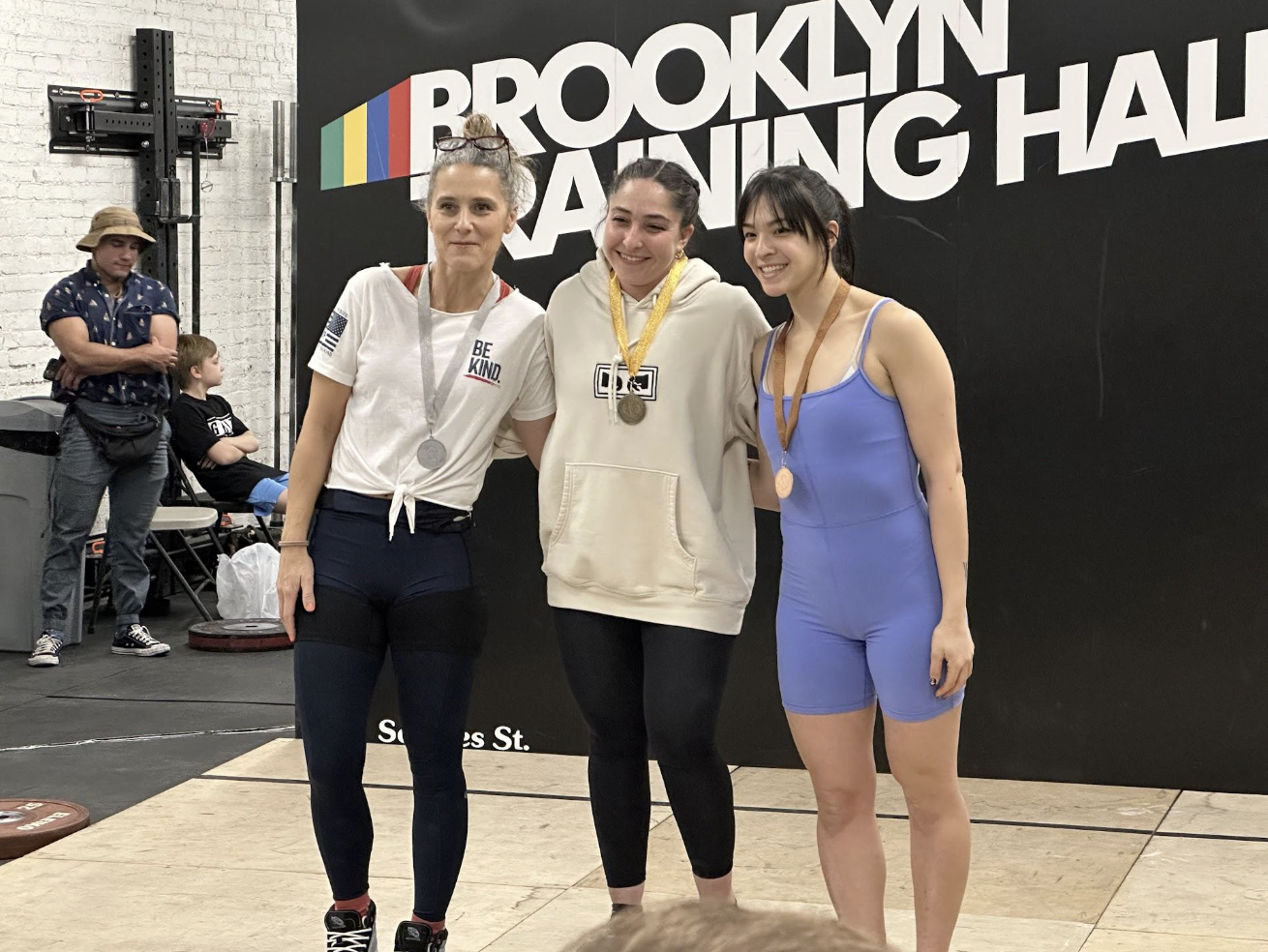
I placed third place at my first Olympic Weightlifting Competition.Present Day
Presently, I have coached athletes through six separate competitions and plan to continue expanding my experience in this space.
My work now includes supporting clients through a wide range of challenges and goals, from rehabilitating movement patterns to helping them return to meaningful milestones such as dancing at their wedding or achieving their first bodyweight pull up. Along the way, I have also progressed athletic skills in myself that I once did not have access to.
My relationship with my womanhood is also stronger than ever. I have learned to honor my cycle, to push when appropriate, and to give myself what I need without compromising my self esteem.
My craft continues to evolve as I add pre and post natal training through ProNatal Fitness and weightlifting education through the USA Weightlifting Foundation to my qualifications, further deepening my understanding of how mental and physical health are interconnected.
What has remained constant is my discipline and my commitment to mastery in my craft. I continue to invest in my relationships with the people around me, practicing honesty, respect, genuine care, and applied knowledge in the way I coach and communicate.
What we do and discuss in the gym is meant to serve as a reference point for how to approach challenges in everyday life.